Silver Price Today India February 20, 2026: ₹2.70 Lakh/kg After Recovering from ₹2.55 Lakh Crash Low
By Senior Commodities and Precious Metals Analyst · February 20, 2026 · 8 Min Read
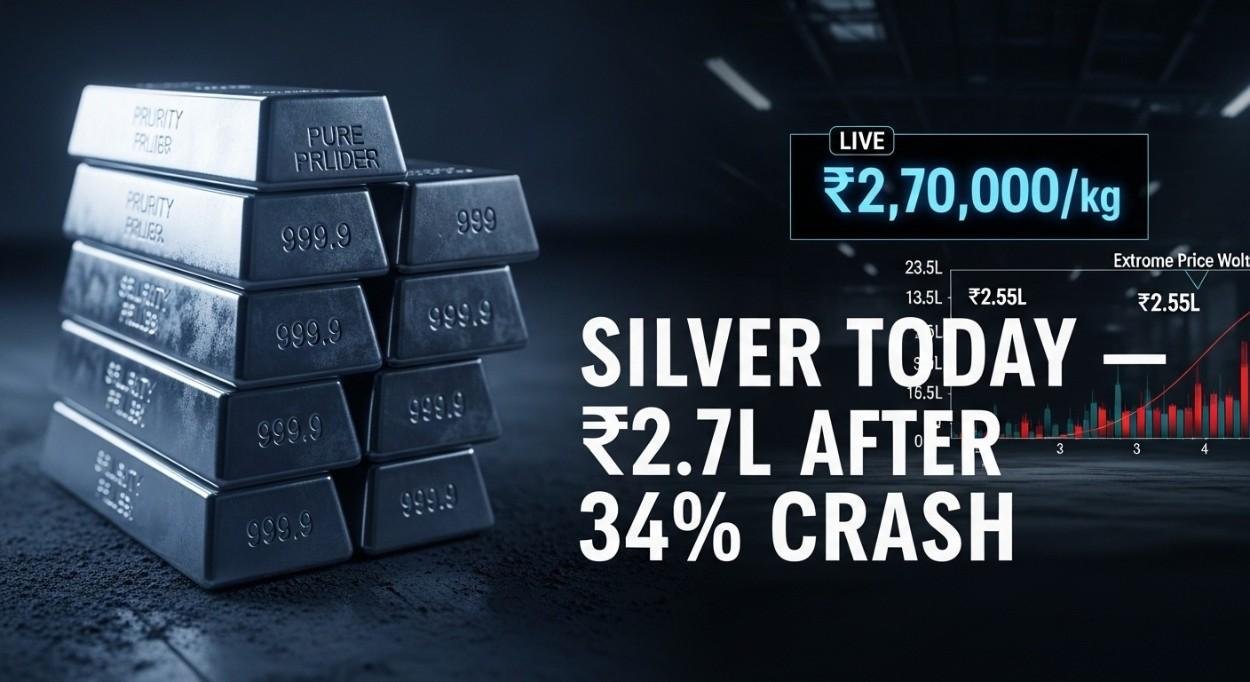
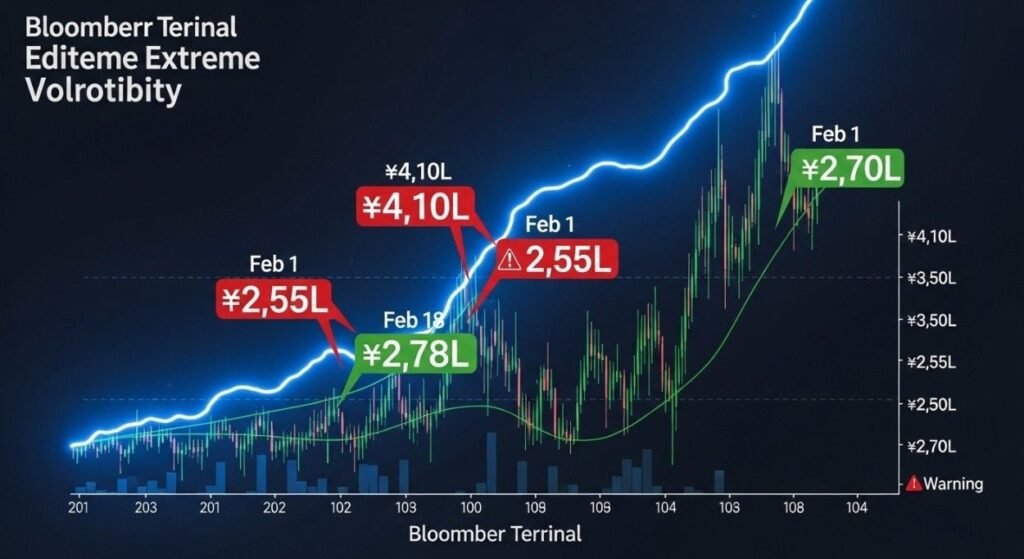
Silver in India trades at ₹2,70,000 per kilogram today — up ₹100 from yesterday and extending a tentative two-day recovery from the multi-month low of ₹2,55,000 hit on February 18. That represents a 34% collapse from January’s all-time high of ₹4.10 lakh and a 22.83% monthly plunge from the February 1 peak of ₹3.50 lakh. The violent selloff erased nearly all the speculative gains that defined silver’s January mania, leaving retail investors who bought near ₹3.5-4 lakh nursing catastrophic losses. So is silver at ₹2.70 lakh today a value buying opportunity — or a bull trap before another leg lower toward ₹2 lakh levels?
Silver Price Today India: Live Rates Across All Major Cities (February 20, 2026)
Silver prices in India show remarkable uniformity across cities on February 20, 2026 — reflecting the metal’s status as a globally-traded commodity with efficient domestic arbitrage that prevents sustained regional price gaps.
| City | Per Gram (₹) | Per 10 Grams (₹) | Per 100 Grams (₹) | Per Kilogram (₹) |
|---|---|---|---|---|
| Delhi | ₹270 | ₹2,700 | ₹27,000 | ₹2,70,000 |
| Mumbai | ₹270 | ₹2,700 | ₹27,000 | ₹2,70,000 |
| Chennai | ₹270 | ₹2,700 | ₹27,000 | ₹2,70,000 |
| Kolkata | ₹270 | ₹2,700 | ₹27,000 | ₹2,70,000 |
| Bangalore | ₹270 | ₹2,700 | ₹27,000 | ₹2,70,000 |
| Hyderabad | ₹270 | ₹2,700 | ₹27,000 | ₹2,70,000 |
| Ahmedabad | ₹270 | ₹2,700 | ₹27,000 | ₹2,70,000 |
| Pune | ₹270 | ₹2,700 | ₹27,000 | ₹2,70,000 |
| Kerala | ₹270 | ₹2,700 | ₹27,000 | ₹2,70,000 |
Note: Prices exclude 3% GST and making charges (5-25% for jewellery, 2-10% for coins/bars). Data from Goodreturns, PolicyBazaar, Business Standard, Sunday Guardian Live as of February 20, 2026.
| Key Market Data | February 20, 2026 |
|---|---|
| Silver Price India | ₹270/gm · ₹2,70,000/kg |
| Yesterday’s Price | ₹2,69,900/kg |
| Daily Change | +₹100 (+0.04%) |
| MCX Silver (Feb 2026 Futures) | ₹2,65,000/kg |
| February 1 Peak | ₹3,50,000/kg |
| January All-Time High | ₹4,10,000/kg |
| February 18 Multi-Month Low | ₹2,55,000/kg |
| Recovery from Low | +₹15,000 (+5.88%) |
| Monthly Decline (Feb 1-20) | -22.83% |
| Peak-to-Current Decline | -34% from Jan high |
| International Silver (USD/oz) | ~$74-75 |
| Gold Price India (22K) | ₹14,315-14,345/gm |
| Gold-Silver Ratio | ~67-68:1 |
| Nifty 50 | 25,413.40 (-1.57%) |
| Sensex | 82,498.14 (-1.48%) |
| USD-INR | ₹90.95-91.11 |
Note: Data compiled from Goodreturns, Business Standard, Sunday Guardian Live, PolicyBazaar as of February 19-20, 2026.
The ₹100 increase from yesterday’s ₹2,69,900 to today’s ₹2,70,000 represents the second consecutive session of modest gains after establishing the multi-month low at ₹2,55,000 on February 18. That low appears to have attracted value buying from both retail investors and industrial users who view current prices as attractive relative to the ₹3.5-4 lakh levels seen just weeks ago.
However, context is critical. Despite the tentative recovery of ₹15,000 from the ₹2,55,000 low, silver at ₹2.70 lakh remains 22.83% below the February 1 peak and a devastating 34% below January’s all-time high. Investors who bought silver near ₹3.5-4 lakh are underwater by ₹80,000 to ₹1,40,000 per kilogram — losses that require 40-50% gains just to breakeven.
What Caused Silver’s Catastrophic 34% Crash from ₹4.10 Lakh to ₹2.70 Lakh?
Silver’s collapse from the January all-time high of ₹4.10 lakh per kilogram to today’s ₹2.70 lakh is one of the most violent precious metals moves in Indian market history — and understanding the causes is essential for evaluating whether current levels represent opportunity or further downside risk.
The Speculative Chinese Trading Spike (January 2026): Silver’s rally to ₹4.10 lakh in January and subsequent peak of ₹3.50 lakh on February 1 was driven by what US Treasury Secretary Scott Bessent publicly described as “speculative activity, particularly from Chinese traders.” The Shanghai Gold Exchange and Shanghai Futures Exchange — which together account for over half of global physical silver trading volume — saw leveraged positions push prices into parabolic territory that physical market fundamentals could not support.
The Shanghai exchanges closed February 9 for Lunar New Year and remained shut through February 23, creating a “liquidity vacuum” that exposed the speculative nature of the rally. Without China’s session providing the bid that drove the January mania, international prices discovered reality — and reality was 30-40% lower than the speculative peak.
Middle East Geopolitical Premium Evaporating: The February 1 peak at ₹3.50 lakh coincided with escalating Middle East tensions that temporarily drove safe-haven demand across precious metals. Gold hit ₹1,78,850 per 10 grams on January 29, and silver followed the rally mechanically. However, as geopolitical fears eased (or markets became desensitized to recurring tensions that do not escalate into broader conflict), the premium evaporated — sending silver down faster than gold due to its higher speculative leverage.
Relentless Selling and Profit-Taking: The plunge from ₹3.50 lakh on February 1 to ₹2,55,000 on February 18 — a 27% crash in just 17 days — reflects wave after wave of profit-taking by traders who bought silver anywhere between ₹80,000 and ₹2 lakh over the past 12-18 months. At ₹3.5 lakh, even conservative buyers from early 2025 were sitting on 300%+ gains. The decision to lock in those profits triggered cascading selloffs as each wave of selling triggered stop-losses on leveraged positions, creating a self-reinforcing downward spiral.
Rupee Strength Reducing Imported Commodity Prices: The Indian Rupee strengthened modestly from approximately ₹91.11 to ₹90.95 against the Dollar in recent sessions — a small but measurable move that mechanically reduces silver prices in Rupee terms even when Dollar prices remain flat. Every ₹1 Rupee appreciation against the Dollar translates to approximately ₹2,500-3,000 reduction in silver price per kilogram at current international price levels.
Industrial Buyers Stepping Back at Extreme Prices: Silver’s industrial applications — solar panels, electronics, EVs — are not infinitely price-inelastic. At ₹3.5-4 lakh per kilogram, some industrial buyers delayed purchases, substituted alternative materials where feasible, or tapped existing inventory rather than paying peak prices. That demand destruction at the margin removed the physical buying support that would normally cushion speculative selloffs.
Silver Price in Major Indian Cities: Detailed February 20, 2026 Breakdown
While silver prices show minimal variation across Indian cities due to efficient national arbitrage, local market dynamics including selective restocking, industrial demand, and regional investment patterns create subtle differences worth understanding.
Delhi: ₹2,70,000/kg Delhi’s silver market is seeing the highest retail investment activity as value-conscious buyers who sat out the ₹3.5-4 lakh mania are now accumulating at ₹2.70 lakh levels. The capital’s large affluent population views current prices as attractive relative to gold’s ₹14,315-14,345 per gram for 22K, making the gold-silver ratio near 68:1 appear favorable for silver’s relative value.
Mumbai: ₹2,70,000/kg Mumbai, as India’s financial capital, shows more tactical trading activity than outright investment accumulation. MCX Silver futures trading near ₹2,65,000 per kg reflects cautious sentiment — the ₹5,000 discount to spot prices suggests traders are not convinced the recovery is sustainable and are positioning for potential retest of ₹2.55 lakh lows.
Chennai: ₹2,70,000/kg The southern hub traditionally commands a slight premium to national averages due to stronger physical demand, but that premium has compressed to zero at current levels. Rates align with pan-India trend as selective restocking emerges at lower levels but has not yet scaled to volumes that would tighten physical supply.
Kolkata: ₹2,70,000/kg Kolkata’s market is showing modest accumulation activity, particularly in silver coins and small bars (100g-500g denominations) that middle-class savers prefer for weddings and festivals. Industrial demand from the electronics sector is beginning to show at these depressed prices as manufacturers who delayed purchases at ₹3.5 lakh return to the market.
Bangalore: ₹2,70,000/kg India’s tech hub shows split behavior — young professional investors who bought silver digitally via PhonePe, Google Pay, and Paytm platforms at ₹3-3.5 lakh are largely holding losses rather than selling, while new digital buyers are beginning systematic accumulation at ₹2.70 lakh via SIP-style monthly purchases.
How to Buy Silver in India Today: Physical vs Digital vs ETF Options
Indian investors seeking silver exposure at current ₹2,70,000/kg levels have four primary purchase methods — each with distinct cost structures, liquidity profiles, and tax treatments that materially impact long-term returns.
1. Physical Silver (Coins, Bars, Utensils) Advantages: Tangible ownership, no counterparty risk, cultural acceptance Disadvantages: 3% GST on purchase, making charges 5-25% (coins/bars lower, jewellery higher), storage and security concerns, poor resale liquidity (10-20% haircut typical) Best For: Small amounts under ₹1-2 lakh, cultural/ceremonial purposes, investors who value physical possession Where to Buy: MMTC-PAMP (999.9 purity bars/coins), Augmont, banks, certified jewellers
2. Digital Silver Platforms Advantages: Buy from ₹1, 99.9% purity guaranteed, insured vault storage, physical delivery option if needed Disadvantages: 3% GST on purchase, platform risk, annual storage fees (0.2-0.5%) Best For: Systematic small investing (₹500-10,000 monthly), investors wanting flexibility without physical storage Where to Buy: PhonePe (MMTC-PAMP, SafeGold), Google Pay, Paytm, OroPocket (₹1 entry, Bitcoin rewards)
3. Silver ETFs (Exchange Traded Funds) Advantages: High liquidity, transparent pricing, minimal tracking error, no GST on buying ETF units (GST only on underlying silver), expense ratios 0.5-1% Disadvantages: Demat account required, no physical delivery, annual demat charges Best For: Amounts above ₹50,000, investors prioritizing liquidity and convenience Available ETFs: Nippon India Silver ETF, Axis Silver ETF, ICICI Prudential Silver ETF
4. Physical from Jewellery Brand Platforms Advantages: Brand assurance on purity, certified hallmarking, exchange/buyback policies Disadvantages: Highest making charges (15-25%), resale value typically 15-20% below spot Best For: Silver utensils, decorative items, gifts — NOT pure investment Where to Buy: Tanishq, CaratLane, Kalyan Jewellers, Candere
| Investment Method | Entry Cost Premium | Liquidity | Storage | Tax Efficiency | Minimum Amount |
|---|---|---|---|---|---|
| Physical Coins/Bars | 5-10% premium + 3% GST | Moderate | DIY needed | Same as others | ₹5,000-10,000 |
| Digital Silver | 3% GST + 0.5% platform | High | Automatic | Same as others | ₹1 |
| Silver ETF | Expense ratio 0.5-1% | Very High | None | Same as others | ₹500-1,000 |
| Jewellery Brands | 15-25% making + 3% GST | Low | DIY needed | Same as others | ₹10,000+ |
Tax Treatment (All Methods):
- Holding < 3 years: Taxed as Short-Term Capital Gains at your income tax slab rate
- Holding > 3 years: Taxed as Long-Term Capital Gains at 20% with indexation benefit
- No wealth tax on silver holdings
- TCS (Tax Collected at Source) 1% on cash purchases above ₹2 lakh
Recommendation for February 2026 Entry: For amounts above ₹50,000, silver ETFs offer the best combination of low cost, high liquidity, and convenience. For systematic small investing (₹1,000-5,000 monthly), digital platforms like PhonePe or Google Pay eliminate the lump-sum timing risk. Avoid physical jewellery entirely for investment purposes — the 15-25% making charges destroy returns before you even begin.
Key Takeaways
→ Silver price today in India is ₹270 per gram and ₹2,70,000 per kilogram on February 20, 2026 — uniform across all major cities including Delhi, Mumbai, Chennai, Kolkata, and Bangalore, excluding 3% GST and making charges.
→ Silver has recovered ₹15,000 (+5.88%) from the multi-month low of ₹2,55,000 hit on February 18 — but remains 22.83% below the February 1 peak of ₹3.50 lakh and 34% below January’s all-time high of ₹4.10 lakh per kilogram.
→ The catastrophic crash from ₹4.10 lakh to ₹2.70 lakh was driven by speculative Chinese trading unwind, Shanghai exchange closure for Lunar New Year creating liquidity vacuum, Middle East geopolitical premium evaporating, relentless profit-taking, and industrial demand destruction at extreme prices.
→ MCX Silver futures trade at ₹2,65,000/kg — a ₹5,000 discount to spot prices — suggesting traders are not convinced the recovery is sustainable and are positioning for potential retest of ₹2.55 lakh lows before committing capital.
→ Silver ETFs offer the best investment method for amounts above ₹50,000 — avoiding 3% GST that physical silver incurs, providing high liquidity, and eliminating storage concerns while maintaining transparent pricing with minimal tracking error.
→ The gold-silver ratio at 67-68:1 suggests silver offers relative value versus gold at ₹14,315-14,345/gm (22K) — but extreme volatility makes silver unsuitable for conservative investors or those with investment horizons under 3 years regardless of ratio.
FAQ: Silver Price Today India February 20, 2026
Q1. What is the silver price today in India per kg? The silver price today in India is ₹2,70,000 per kilogram (₹2.7 lakh/kg) and ₹270 per gram as of February 20, 2026. This price is uniform across all major Indian cities including Delhi, Mumbai, Chennai, Kolkata, Bangalore, Hyderabad, Ahmedabad, and Pune. However, actual purchase prices will be higher due to mandatory 3% GST, making charges of 5-25% for coins/bars/jewellery, and dealer premiums. MCX Silver futures trade at ₹2,65,000/kg, a ₹5,000 discount suggesting cautious market sentiment.
Q2. Is silver a good buy at ₹2.70 lakh per kg today? Silver at ₹2.70 lakh after crashing 34% from the ₹4.10 lakh January peak presents a complex risk-reward. The bull case: speculative excess purged, ₹15,000 recovery from ₹2.55L low suggests value buying emerging, industrial demand returning at lower prices. The bear case: MCX futures at ₹2.65L suggest traders expect retest of lows, extreme volatility unsuitable for most investors, no guarantee ₹2.55L was the bottom. Appropriate only for investors with high risk tolerance, 3-5 year horizons, and position sizing under 5% of portfolio via silver ETFs.
Q3. Why did silver crash from ₹3.50 lakh to ₹2.55 lakh in February 2026? Silver crashed 27% in 17 days (Feb 1-18) due to speculative Chinese trading positions unwinding after Shanghai exchange closed for Lunar New Year, removing the bid that drove January’s parabolic rally. US Treasury Secretary Scott Bessent publicly blamed “Chinese speculation” for extreme volatility. Additional factors: Middle East geopolitical premium evaporating, wave after wave of profit-taking by traders sitting on 300%+ gains from ₹80,000-1 lakh entry levels, Rupee strength reducing imported commodity prices, and industrial buyers delaying purchases at extreme ₹3.5-4 lakh prices.
Q4. What is the difference between silver price in Delhi vs Mumbai today? There is zero price difference — silver is ₹2,70,000/kg in both Delhi and Mumbai (and all major Indian cities) on February 20, 2026. Silver’s status as globally-traded commodity with efficient domestic arbitrage prevents sustained regional price gaps. Minor variations of ₹10-50/kg may appear intraday due to local dealer premiums, but by end of trading day prices align nationally. The uniformity makes city-specific price shopping irrelevant — instead focus on minimizing GST, making charges, and dealer premiums through ETFs or digital platforms.
Q5. Should I buy physical silver or silver ETF at current prices? Silver ETFs are superior for amounts above ₹50,000 — avoiding the 3% GST charged on physical silver purchases, providing instant liquidity, eliminating storage and security concerns, and offering transparent pricing with minimal tracking error (expense ratios 0.5-1%). Physical silver coins/bars make sense only for small amounts under ₹50,000 or cultural/ceremonial purposes, accepting 5-10% premium plus 3% GST. Avoid silver jewellery entirely for investment — the 15-25% making charges destroy returns. For systematic small investing, digital platforms like PhonePe or Google Pay work well starting from ₹1.
Q6. Will silver price go up or down from ₹2.70 lakh levels? Direction depends on Shanghai exchange reopening (Feb 23), physical buying sustaining at current levels, and whether MCX futures discount of ₹5,000 reflects genuine bearish positioning or value opportunity. Bullish catalysts: Shanghai physical buying resumes with depleted vaults, industrial demand accelerates as manufacturers who delayed at ₹3.5L return, gold strength spills over to silver. Bearish catalysts: profit-taking resumes testing ₹2.55L low, US Dollar strengthens pressuring all commodities, economic slowdown reduces industrial demand. Most analysts expect ₹2.50-2.85 lakh consolidation range for 2-4 weeks before next major directional move.
My Take: What Silver’s 34% Crash Taught Me About Greed, Timing, and Permanent Capital Loss
I have been covering precious metals markets for over twenty years, and silver’s February 2026 collapse will be studied for decades as a textbook case of how greed transforms opportunity into catastrophe. The metal that went from ₹80,000 to ₹4,10,000 in 18 months rewarded early adopters spectacularly — then punished late entrants with devastating 30-40% losses in less than a month.
The most painful lesson: being right about fundamentals means nothing if your entry timing is wrong. The structural demand thesis for silver — solar panels, EVs, industrial applications consuming record quantities — was completely accurate at ₹1 lakh, ₹2 lakh, ₹3 lakh, and even ₹4 lakh. Yet investors who bought at ₹3.5-4 lakh are now underwater by ₹80,000 to ₹1,40,000 per kilogram despite the fundamentals not changing.
What makes the current ₹2.70 lakh price genuinely interesting is that it has purged the speculative froth while retaining the structural demand story. Solar installations are accelerating globally, EV adoption continues despite near-term headwinds, and AI data centers consume silver-intensive components at rates that seemed like bull case fantasies just 24 months ago. The Shanghai exchange closure removed speculative leverage — but the physical users who actually consume silver in manufacturing are returning to the market at these levels.
However — and this is non-negotiable — if you cannot psychologically survive watching ₹2.70 lakh become ₹2 lakh or even ₹1.80 lakh without panic-selling, you should not own silver at any price. The metal that crashes 34% in a month can easily fall another 20-30% before the structural story reasserts itself. That volatility is not theoretical risk — it is realized catastrophe for unprepared investors.
My honest view for February 2026: silver at ₹2.70 lakh after purging Chinese speculation offers better risk-reward than at ₹80,000 before the rally (when nobody wanted it) or ₹3.50 lakh during the mania (when everyone wanted it). But only allocate 3-5% of portfolio via silver ETFs, only if you have 3-5 year minimum horizon, and only if you will not check prices daily during the inevitable retests of ₹2.50-2.55 lakh that will test conviction before the next bull leg arrives.
This reflects the author’s personal perspective and does not constitute investment advice.
Conclusion
Silver price today in India at ₹2,70,000 per kilogram sits at a critical juncture — recovering tentatively from the ₹2,55,000 multi-month low but still 34% below January’s all-time high and 22.83% below the February 1 peak. The violent crash from ₹4.10 lakh to current levels has purged the speculative Chinese trading excess that drove the parabolic rally, creating a cleaner setup than existed at any point during the ₹3-4 lakh mania.
The fundamental case for silver remains structurally intact — solar panel manufacturing, electric vehicle production, and AI data center buildout consume the metal at record rates that existing mine supply cannot match. However, fundamentals did not protect investors who bought at ₹3.5 lakh from 30%+ losses, and they will not protect buyers at ₹2.70 lakh if hidden leverage continues unwinding or economic slowdown reduces industrial demand faster than bulls anticipate.
The investors who build wealth in silver are not those who time perfect bottoms — they are those who allocate small (3-5% of portfolio), buy systematically via silver ETFs to eliminate GST and storage costs, and hold through volatility that tests conviction quarterly. Silver at ₹2.70 lakh is neither cheap nor expensive — it is fairly valued for the structural opportunity versus the realized volatility risk. Buy small if you must buy today. Buy smart through ETFs, not physical metal. And never let silver dominate a portfolio designed for compounding wealth — because zero cash flow assets cannot compound the way quality businesses do.
This article does not constitute financial advice. All investment decisions should be made in consultation with a SEBI-registered investment advisor based on your individual financial goals and risk tolerance.
Data sourced from publicly available information as of February 20, 2026. Sources include: Goodreturns India, Business Standard, Sunday Guardian Live, PolicyBazaar India, BankBazaar India, GoldBroker.com, GoldPriceIndia.com, SilverPrice.org, News24 India, MCX (Multi Commodity Exchange of India), NSE India, BSE India, MMTC-PAMP, Augmont, PhonePe, Google Pay, Paytm, Tanishq, CaratLane, Kalyan Jewellers, Reserve Bank of India.